Skip to content
Surplus wire buying. Full reels, partials and project overstock. Send inventory details for review.
Read a Wire Reel Tag Before Listing Project Surplus surplus electrical wire inventory

Manufacturer and part-number identification guide

Read a Wire Reel Tag Before Listing Project Surplus

A square, readable reel-tag photograph can tie a project-surplus item to the manufacturer, part number, conductor, gauge, insulation or jacket, voltage marking, original length, reel number, and applicable approvals.

  • Reel and package evidence
  • Remaining footage documented
  • Ownership and release
  • Written terms by approval
LabelsManufacturer & part number
QuantityReels, cartons, coils & pallets
ReleaseOwnership & project origin
AccessStorage & loading facts
Inventory review · written terms required

Request a Quote

Send the reel label, package counts, remaining footage, condition, release, storage and access details for review. No purchase, price, timing or logistics outcome is guaranteed.

This form sends details, not photos. Email reel tags, the complete lot and condition photos to electricalequipmentbuyers@gmail.com, or call 954-740-1983. Review does not guarantee a purchase, price, timing or logistics.

Resolve label uncertainty before describing the cable

Treat the reel tag as a record to check against the actual cable, not a substitute for that check. A reused reel, loose tag or unclear photograph can connect the wrong description to the stock being offered.

Separate identification fields from package fields

Manufacturer, part number, conductor material and count, gauge or kcmil, insulation or jacket and printed voltage or approval markings describe the product. Reel number and original length describe the package. Original length should not be copied into a remaining-footage field after cable has been used.
Resolve mismatches rather than choose the more valuable label

Compare the tag with readable jacket or insulation print where available. If part numbers, conductor details or construction do not agree, document both and flag the conflict. Keep loose tags with the corresponding reel identifier. A manufacturer name or jacket color alone is not a complete identification.

Send readable evidence when a field cannot be established

Photograph the entire tag square to the camera, then the relevant print line without cropping away neighboring markings. Keep a whole-reel view in the same photo group. Transcribe uncertain fields as unreadable or unconfirmed; do not guess ratings, certification status or intended suitability from similar-looking stock.

A label record with uncertainty left visible

Illustrative inventory fields—not a real manufacturer certificate, inspected reel or purchase.

Tag record
Manufacturer and part number transcribed as printed; original footage retained in its own field.
Physical check
Readable cable markings photographed and compared with the tag; any mismatch noted rather than silently corrected.
Unconfirmed detail
One field is unreadable; remaining footage is not established. Both stay unconfirmed until matching evidence is available.

Use this record in your next step

Link each tag photograph and print-line photograph to one inventory identifier. Send what is readable first; additional photographs or original records may resolve the missing fields without altering the material.

Record the label fields exactly as printed

Do not infer a construction from color or reel size when a tag or print line is available.

  • Manufacturer and catalog or part number
  • Copper or aluminum conductor and conductor count
  • AWG or kcmil gauge and strand construction
  • Insulation, jacket, voltage, approvals, length, and reel number

Connect the tag to the physical inventory

Pair the label with a wide inventory view, jacket print, conductor end, packaging, quantity, condition, storage, ownership, release, and project-origin record.

  • Whole reel, carton, coil, or pallet
  • Readable jacket or insulation print
  • Cut end showing conductor and construction
  • Damage, weather exposure, and remaining-footage evidence
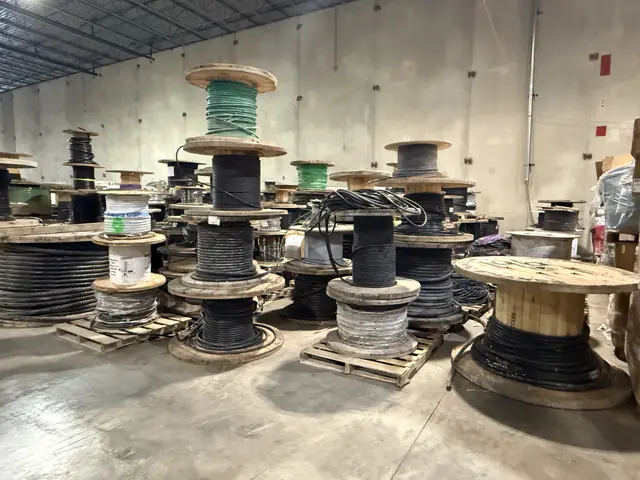
Wire reel tag and jacket markings photographed for project-surplus identification
Capture the entire tag square to the camera, then add jacket print, conductor end, reel, packaging, and condition views.

Preserve the label through storage and handling

Keep tags attached or bagged with the matching reel, secure partial ends, avoid covering markings with wrap, and record site access. Logistics remain conditional on the verified lot and written approval.

  • Photograph the tag before wrapping or moving
  • Keep loose labels with their reel number
  • Separate unlike part numbers and gauges
  • Disclose storage, site access, and loading constraints

Project-surplus questions

Evidence-based answers without outcome guarantees

Which reel-tag details matter most for identification?

Manufacturer, catalog or part number, conductor metal and count, AWG or kcmil gauge, strand construction, insulation or jacket, voltage, approvals, original length, and reel number are the strongest fields.

What should be photographed when the tag is missing or unreadable?

Photograph the full reel, jacket or insulation print from several readable sections, conductor end, package, quantity, condition, and any project or purchase record that can connect the material to a construction.

Ready to document the project inventory?

Call or send the released inventory record. Review does not guarantee purchase or logistics. Photos can be emailed to electricalequipmentbuyers@gmail.com. Any purchase or logistics arrangement requires agreed terms.

Use the wire-details form
Call954-740-1983
Call 954-740-1983