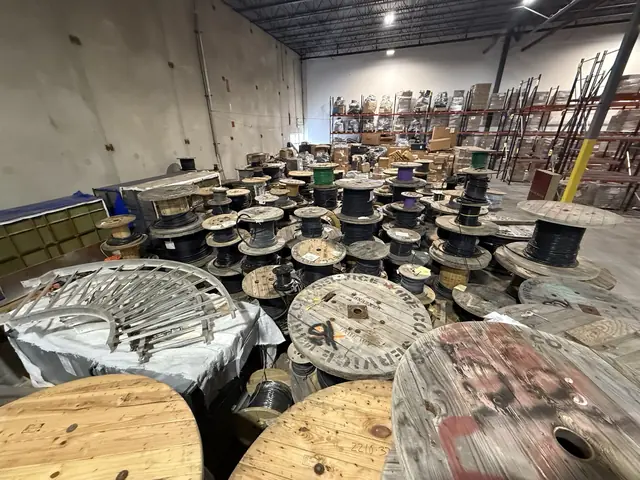
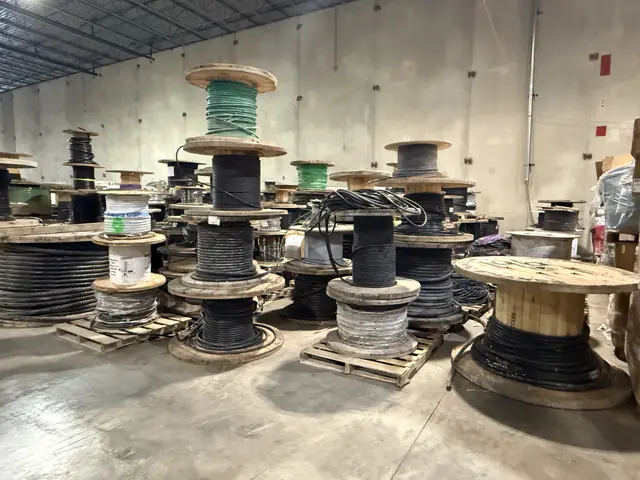
Choose a disposition path only after identifying the released cable and separating unused, supportable inventory from recovery-only material. A documented project record supports a more useful review than a generic location or price request.
Send the reel label, package counts, remaining footage, condition, release, storage and access details for review. No purchase, price, timing or logistics outcome is guaranteed.
Compare disposition options before changing the cable
The useful question is not simply who pays the most per pound. First identify whether the lot is unused, traceable stock with usable lengths, or mixed and damaged material needing recovery review. Different portions of one lot may need different options.
Check return or transfer eligibility where it exists
For unused stock, ask the original supplier about its actual return policy, packaging requirements and charges. A project transfer is another option only when there is a legitimate destination and release authority. Neither is automatically available, and neither establishes a price for a surplus sale.
Present identifiable stock for surplus review
Readable construction markings, useful continuous lengths and condition evidence help a buyer assess a reuse candidate. Original cartons or reels can preserve that identification. Unknown length, opened packaging or a missing tag should be disclosed; they are not reasons to invent a specification or promise acceptance.
Separate recovery material and compare the whole offer
Short mixed cuts, unidentified stock or damaged material may require a metal-recovery assessment rather than a reusable-stock review. Keep those groups separate. Compare the exact material, quantity basis, exclusions, payment conditions and agreed transport or handling costs in writing—not a headline price detached from the lot.
Questions to compare written options
Use the same material record with each option. These are comparison questions, not recommended prices or guaranteed services.
Scope
Which identified rows or packages are included, and which are excluded?
Quantity basis
Is the proposal based on confirmed usable footage, counted packages or an agreed material-weight basis?
Net terms
Who is responsible for any agreed handling or freight charges, and what conditions apply before payment or release?
Use this record in your next step
Keep labels and continuous lengths intact while comparing routes. The current record lets you evaluate a proposed transaction without treating all wire as either reusable stock or scrap by default.
Separate usable inventory from recovery-only material
Identify intact labeled reels, supported partials, original cartons, coils, and mixed stock before choosing a surplus, return, transfer, or recovery path.
Unused labeled full reels
Supported continuous partial-reel footage
Original cartons and coils
Damaged, weathered, unidentified, or recovery-only material
Use evidence to compare disposition paths
A manufacturer or part number, conductor, gauge, remaining footage, package count, condition, storage, ownership, release, and project-origin record helps distinguish alternatives without guaranteeing an outcome.
Reel tag and jacket print
Package count and footage evidence
Condition and storage photographs
Ownership and release documentation
Compare disposition paths using the same label, quantity, condition, ownership, release, storage, and access record.
Evaluate handling constraints before selecting a path
Account for reel size, weight, dock or grade-level loading, equipment, site hours, and truck restrictions. Logistics, timing, price, purchase, removal, and payment depend on the selected path and written approval.
What information helps compare cable disposition options?
Use manufacturer or part number, conductor, gauge, insulation or jacket, original and remaining footage, package count, condition, storage, ownership, release, project origin, and access.
Does a surplus review always produce a purchase option?
No. Material, evidence, condition, quantity, location, access, written terms, and approval determine whether a transaction is available; no purchase, price, timing, logistics, or payment is guaranteed.
Ready to document the project inventory?
Call or send the released inventory record. Review does not guarantee purchase or logistics. Photos can be emailed to electricalequipmentbuyers@gmail.com. Any purchase or logistics arrangement requires agreed terms.